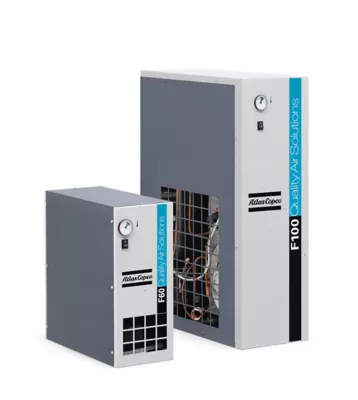
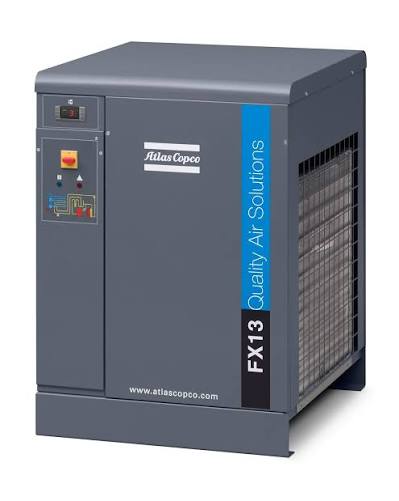
FX industrial refrigerant air dryers
Refrigerated Air Dryers

Description
FX industrial refrigerant air dryers, primarily manufactured by Atlas Copco, are engineered to remove damaging moisture from compressed air systems to prevent corrosion, equipment breakdown, and product spoilage. They cool compressed air down to a stable pressure dew point as low as +3°C (+37.4°F), which causes water vapor to condense so it can be automatically drained.
How They Work
The FX series uses a standard mechanical refrigeration circuit. Warm, moisture-laden incoming air enters an air-to-air heat exchanger where it is pre-cooled. It then passes through a refrigerant-to-air heat exchanger, cooling down to its dew point. The condensed water is collected and evacuated via an automatic drain. Finally, the cold, dry air is reheated by the incoming air to prevent pipe sweating before exiting the unit.

Benefits
FX industrial refrigerant air dryers reliably remove moisture from compressed air systems to prevent pipe corrosion and equipment breakdown. Key benefits include a steady pressure dew point, plug-and-play installation, and minimal maintenance. They consume virtually no processed compressed air and extend the overall lifespan of downstream pneumatic tools.
Specific advantages of FX industrial dryers include:
- Consistent Performance: They deliver a reliable pressure dew point (typically as low as +3°C / +37°F), preventing condensate from freezing and stopping moisture from damaging your compressed air lines.
- Energy Savings: They consume practically no processed compressed air to operate and feature an efficient hot gas bypass that prevents wasted energy.
- Easy Installation & Operation: Designed with a plug-and-play concept and self-regulating controls, they require only a single electrical connection to get started.
- Low Maintenance: An ergonomic layout allows easy access to key components for straightforward servicing, resulting in longer intervals between routine maintenance.
- Equipment Longevity: By keeping the air dry, you protect production quality, reduce pneumatic machinery wear, and minimize pipework leaks.